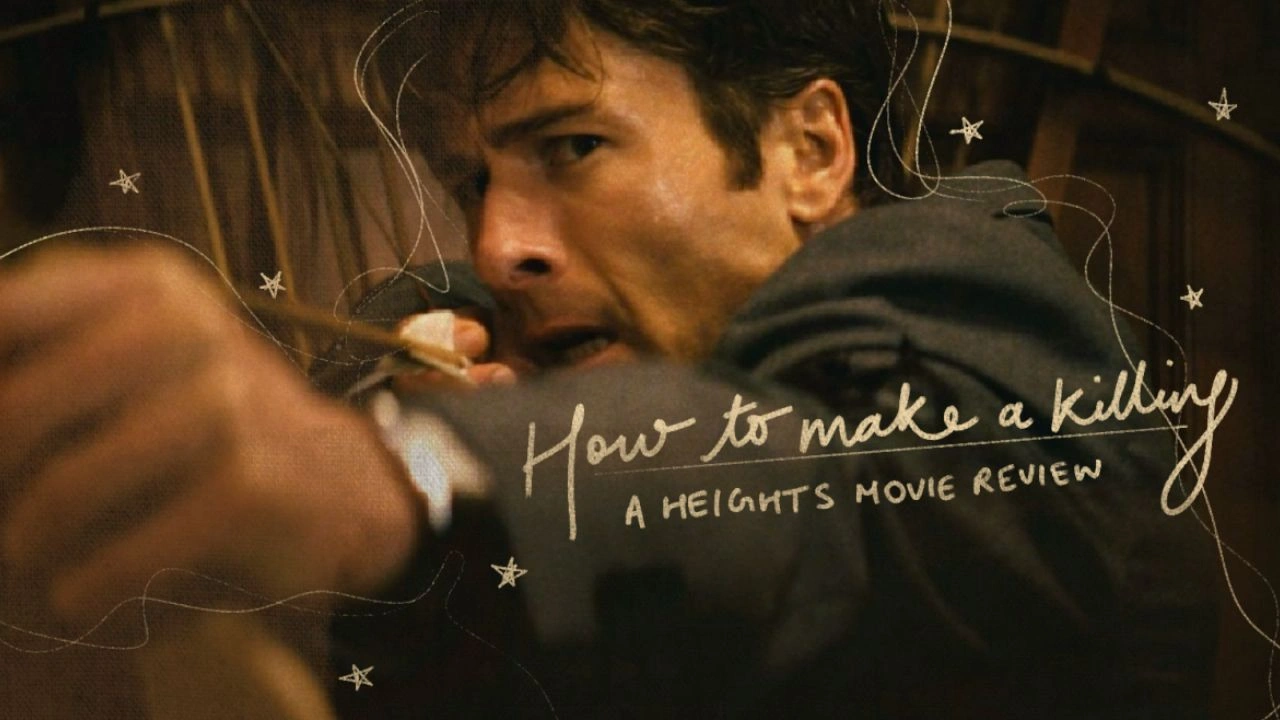
How to Make a Killing Movie: At its core, How to Make a Killing revolves around an emotionally charged premise: a blue-collar man, disowned at birth by his obscenely wealthy family, decides to reclaim what he believes is rightfully his. The twist? He is willing to eliminate every obstacle—including his own relatives—to secure his inheritance.
This narrative immediately positions the film as more than a conventional revenge story. It explores the corrosive power of money and the psychological scars of rejection. Disownment at birth is not merely a legal act—it is a profound emotional wound. For the protagonist, the inheritance represents validation, legitimacy, and revenge all at once.
By framing the story around family conflict, the film taps into universal anxieties about belonging, status, and worth. In a world where wealth often defines influence, the protagonist’s mission becomes both personal and political.
John Patton Ford’s Sharp Directorial Edge
Writer-director John Patton Ford is known for crafting stories that examine ambition, deception, and moral compromise. His storytelling style often balances suspense with biting wit, making him an ideal creative force behind a dark comedy thriller like How to Make a Killing.

Ford’s involvement in both writing and directing ensures a unified creative vision. This cohesion is critical in a genre that walks a tightrope between tension and satire. Too much humor could undermine the stakes; too much darkness could alienate audiences. Ford’s challenge—and likely triumph—lies in maintaining equilibrium.
Industry observers expect the film to feature clever dialogue, morally ambiguous characters, and escalating suspense. Ford’s storytelling sensibility often highlights the absurdity of greed while exposing its devastating consequences.
Glen Powell as the Relentless Protagonist
Glen Powell leads the cast as the disowned heir determined to reclaim his fortune. Powell’s screen persona often combines charm with intensity, making him well-suited to portray a character who is both sympathetic and dangerous.
The protagonist’s arc requires careful nuance. He must evoke empathy as a man wronged at birth, yet also unsettle audiences with his willingness to cross moral boundaries. Powell’s ability to navigate complex emotional terrain will be central to the film’s success.
His character likely oscillates between calculated strategy and impulsive rage. Each decision propels him deeper into moral compromise, raising the question: does reclaiming wealth justify sacrificing humanity?
Margaret Qualley and Jessica Henwick: Allies or Adversaries?
Margaret Qualley and Jessica Henwick round out the primary cast, adding layers of intrigue. While specific character details remain under wraps, both actresses are known for portraying intelligent, resilient women who command attention.
Qualley’s role may serve as emotional counterbalance or strategic partner to Powell’s character. Henwick, often associated with strong and determined personas, could embody a rival heir or a formidable obstacle within the family’s inner circle.
Their dynamic with Powell is likely to shape the film’s emotional core. Inheritance battles are rarely solitary endeavors; alliances shift, loyalties fracture, and trust becomes currency. The interplay between these three performers promises tension, chemistry, and unpredictability.
Wealth as a Weapon
The title How to Make a Killing operates on multiple levels. It references financial gain, but also hints at literal and figurative destruction. The phrase encapsulates the film’s dark humor and thematic depth.
Wealth in this story is not merely background—it is a weapon. The protagonist’s affluent family represents an elite world of power, secrecy, and entitlement. Their influence likely extends beyond personal fortune into corporate and social dominance.
By challenging this system, the protagonist wages war against more than individuals; he confronts entrenched privilege. Yet as he adopts ruthless tactics, he risks becoming indistinguishable from those he despises.
The film’s satire may expose the moral bankruptcy hidden beneath luxurious facades, inviting viewers to question society’s obsession with inheritance and status.
Comedy Meets Thriller: A Delicate Balance
Blending Comedy, Drama, and Thriller elements is no easy task. Dark comedy thrives on discomfort, while thrillers demand sustained tension. The success of How to Make a Killing depends on its ability to weave these genres seamlessly.
Humor may arise from absurd family dynamics, ironic reversals, and sharp dialogue. Meanwhile, suspense builds through escalating confrontations and strategic maneuvering.
This genre fusion ensures broad appeal. Audiences seeking sharp satire will appreciate the wit, while thriller enthusiasts will be drawn to high-stakes conflict. The drama grounds the story emotionally, preventing it from becoming purely farcical.
A Transnational Production: UK and France Collaboration
As a co-production between the United Kingdom and France, the film reflects a growing trend of cross-border collaboration in cinema. This partnership may influence the film’s aesthetic sensibility, blending British wit with French cinematic sophistication.
Such collaborations often enhance narrative texture. The European production context may lend the film a refined visual style and atmospheric tone, distinguishing it from conventional Hollywood thrillers.
English-language accessibility ensures global reach, while the international backing broadens its market potential.
Themes of Identity and Legitimacy
Beyond wealth and revenge, How to Make a Killing explores identity. Being disowned at birth strips the protagonist of familial recognition. His pursuit of inheritance becomes a quest for legitimacy.
Is bloodline destiny? Or is identity forged through experience? These questions drive the narrative’s emotional undercurrents.
The protagonist’s blue-collar background contrasts sharply with his family’s opulence. This class divide heightens tension and underscores themes of exclusion. By striving to reclaim his inheritance, he attempts to bridge a gap that has defined his existence.
Yet the film may ultimately suggest that true validation cannot be bought.
Escalation and Moral Consequences
As the story unfolds, stakes inevitably rise. What begins as calculated maneuvering could spiral into dangerous territory. Each relative standing in his way represents not only an obstacle but also a moral test.
Thrillers thrive on escalation. Audiences can expect twists, betrayals, and moments of shocking revelation. The title’s double entendre hints at consequences that extend beyond financial gain.
Will the protagonist achieve his goal? And if he does, what will it cost him? These questions sustain suspense throughout the narrative.
Anticipation Ahead of March 2026
With a United Kingdom release date of March 13, 2026, the film enters a competitive spring season. However, its distinctive premise and star power position it as a standout offering.
Glen Powell’s growing popularity, combined with Margaret Qualley and Jessica Henwick’s strong reputations, ensures attention from both critics and audiences. Early buzz suggests that the film may attract awards consideration, particularly if performances deliver emotional depth.
The blend of satire and suspense also enhances replay value. Films that challenge viewers intellectually often enjoy lasting cultural impact.
Why This Story Resonates Today
Inheritance disputes are as old as storytelling itself. Yet in contemporary society—where wealth inequality dominates headlines—the theme feels especially urgent.
How to Make a Killing speaks to anxieties about privilege, entitlement, and systemic barriers. It questions whether wealth truly defines success or merely exposes moral weakness.
The protagonist’s journey reflects broader societal tensions. Many feel excluded from elite circles due to circumstances beyond their control. By dramatizing this struggle, the film connects personal grievance with cultural commentary.
Official Trailer -How to Make a Killing Movie
Conclusion: A Calculated Risk Worth Taking
How to Make a Killing promises a daring fusion of dark comedy and psychological thriller. Under John Patton Ford’s direction, the film is poised to dissect ambition and inheritance with intelligence and edge.
Glen Powell’s performance as the relentless heir will likely anchor the narrative, supported by Margaret Qualley and Jessica Henwick’s compelling presence. Together, they bring complexity to a story that refuses easy moral answers.
As March 2026 approaches, anticipation continues to mount. If executed with the precision suggested by its premise and talent, How to Make a Killing may emerge as one of the year’s most provocative and entertaining releases.