
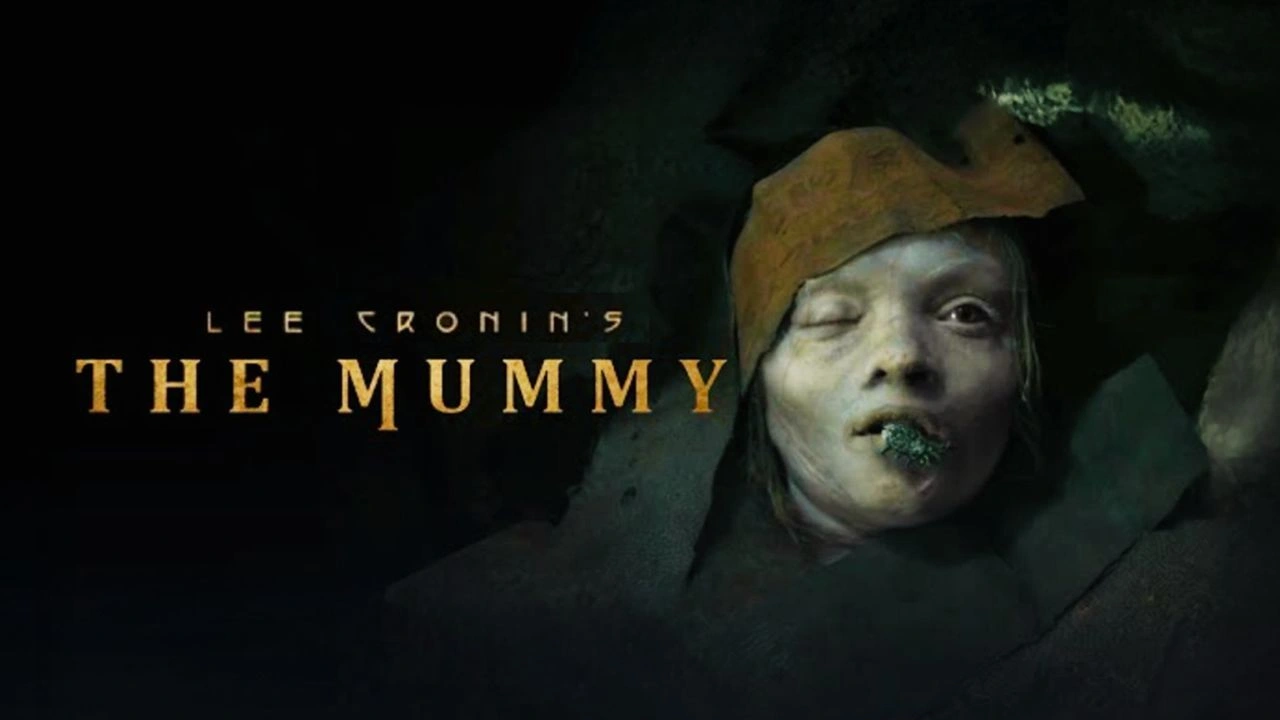
Lee Cronin’s The Mummy Movie: The legend of The Mummy has fascinated audiences for nearly a century. From the early classic Universal horror films of the 1930s to modern adventure adaptations, the story of ancient curses and awakened evil has remained a powerful cinematic concept. In 2026, director Lee Cronin brings a darker and more psychological interpretation of the myth with Lee Cronin’s The Mummy.
Unlike earlier versions that leaned heavily toward action-adventure, Cronin’s vision returns to the roots of horror. The film focuses on psychological fear, family trauma, and the terrifying consequences of disturbing ancient forces.
Starring Jack Reynor, Laia Costa, and Natalie Grace, the movie presents a haunting narrative centered on a family tragedy that resurfaces years later in unimaginable ways.
The story begins with the mysterious disappearance of a young girl in the desert. After eight years without answers, her sudden return to her family should be a miracle. Instead, it becomes the beginning of a horrifying mystery that challenges everything the family believes about life, death, and the supernatural.
Released on April 17, 2026, and produced across Ireland and the United States, the film aims to reinvent the iconic monster for modern audiences.
In this detailed Lee Cronin’s The Mummy Movie Review, we examine the storyline, performances, direction, cinematography, horror elements, themes, strengths, weaknesses, and the film’s place within the future of horror cinema.
Plot Overview: A Reunion That Turns Into a Nightmare
The story of Lee Cronin’s The Mummy begins with a tragedy that devastates a family.
A journalist and his family travel through a remote desert region during an investigative assignment.
During the journey, their young daughter suddenly disappears under mysterious circumstances.
Despite extensive searches and investigations, no trace of the girl is ever found.
The family is left broken by grief.
Years pass, and the disappearance becomes a haunting memory that shapes their lives.
Eight years later, something extraordinary happens.
The girl suddenly reappears.
She is discovered wandering near the same desert region where she originally vanished.
Authorities return her to her family.
At first, the reunion feels miraculous.
The parents believe their nightmare is finally over.
However, subtle signs soon reveal that something is terribly wrong.
The girl behaves strangely.
She remembers little about where she has been.
Unexplainable events begin occurring around the family.
Objects move on their own.
Strange symbols appear in unexpected places.
And the girl’s presence seems connected to an ancient and terrifying force buried beneath the desert sands.
As the mystery unfolds, the family discovers that their daughter’s disappearance may have awakened a curse older than human civilization.
What returned to them may not truly be their child.
Read Also: Kenatha Kanom 2026 Movie Review – A Fresh Tamil Comedy-Drama with Mystery and Meaning
Lee Cronin’s Vision for The Mummy
Director Lee Cronin is known for his ability to create intense and unsettling horror experiences.
Rather than focusing on large-scale spectacle, Cronin prioritizes atmosphere and psychological tension.
In The Mummy (2026), he reimagines the iconic monster as something more mysterious and terrifying than previous versions.
Earlier films often portrayed the mummy as a physical monster seeking revenge.
Cronin’s interpretation takes a more supernatural and psychological approach.
The horror emerges slowly through disturbing events and emotional tension within the family.
Cronin also emphasizes realism in the film’s emotional storytelling.
The characters’ reactions to the supernatural events feel grounded and believable, which enhances the overall horror experience.
Jack Reynor’s Emotional Performance
Actor Jack Reynor plays the father, a journalist whose investigative instincts push him to search for answers behind his daughter’s disappearance.
Reynor delivers a performance filled with emotional depth.
His character is torn between relief that his daughter has returned and fear that something is terribly wrong.
The emotional conflict becomes the driving force of the narrative.
Reynor portrays the gradual psychological breakdown of a man who must confront the possibility that his child is connected to something ancient and dangerous.
Laia Costa as the Determined Mother
Laia Costa plays the mother, whose emotional journey forms the heart of the film.
Unlike her husband, she initially refuses to believe that anything supernatural could be affecting their daughter.
Her character represents hope and denial.
Costa’s performance captures the emotional complexity of a mother who desperately wants to believe that her child has truly come home.
As the story progresses and the supernatural events intensify, her character undergoes a dramatic transformation.
She must confront the terrifying possibility that the truth may be far worse than the family ever imagined.
Natalie Grace’s Chilling Performance
One of the film’s most unsettling elements is the performance of Natalie Grace, who plays the returned daughter.
Child actors in horror films often face the challenge of portraying both innocence and eeriness.
Grace delivers a haunting performance that balances these qualities.
At times, her character appears vulnerable and frightened.
At other moments, subtle changes in her behavior create a sense of unease.
Her expressions, movements, and dialogue delivery contribute significantly to the film’s atmosphere of suspense.
Cinematography: A Desert of Shadows
The cinematography of Lee Cronin’s The Mummy plays a critical role in building tension.
The desert setting provides a visually striking environment that contrasts beauty with danger.
Wide landscape shots emphasize the vast emptiness of the desert.
These visuals reinforce the idea that ancient secrets may lie hidden beneath the sand.
Inside the family’s home, the cinematography shifts to darker lighting and confined spaces.
This contrast creates a sense of isolation and claustrophobia as the supernatural events escalate.
Horror Elements and Atmosphere
Unlike traditional monster movies, The Mummy (2026) relies heavily on psychological horror.
The film avoids excessive jump scares.
Instead, it builds tension through gradual revelations and unsettling imagery.
Disturbing sounds, unexplained movements, and mysterious symbols contribute to the sense of dread.
Cronin’s storytelling encourages viewers to imagine the unseen horrors lurking behind the scenes.
This approach makes the film more suspenseful and emotionally engaging.
Music and Sound Design
Sound design plays an essential role in creating the film’s terrifying atmosphere.
The background score features haunting orchestral compositions combined with ambient sounds.
Low-frequency tones create tension during quiet scenes.
Sudden shifts in music signal moments of danger or revelation.
The sound design enhances the emotional intensity of the narrative without overwhelming the visuals.
Themes Explored in The Mummy
Beyond its supernatural elements, the film explores several meaningful themes.
Family Trauma
The disappearance of the daughter leaves lasting emotional scars on the family.
The story examines how unresolved grief can shape relationships.
Faith and Doubt
The characters struggle to understand whether the events they are witnessing are supernatural or psychological.
Ancient History and Modern Consequences
The film suggests that disturbing ancient forces can have unexpected consequences for modern society.
Identity and Possession
One of the most disturbing themes is the question of whether the returned girl is truly herself—or something else entirely.
Strengths of the Film
Lee Cronin’s The Mummy offers several strengths.
Atmospheric Horror
The film focuses on tension and psychological fear rather than excessive visual effects.
Strong Performances
The cast delivers emotionally convincing performances.
Creative Reimagining
Cronin’s approach reinvents the mummy myth for modern audiences.
Powerful Visual Style
The desert setting adds unique visual depth to the story.
Weaknesses of the Film
Despite its strengths, the film may face some challenges.
Slow Pacing
The gradual storytelling style may feel slow for viewers expecting action-heavy horror.
Dark Emotional Tone
The film’s intense themes may be unsettling for some audiences.
However, these elements contribute to the film’s authenticity as a horror experience.
Read Also: Reminders of Him Movie 2026: A Poignant Story of Redemption, Motherhood, and Second Chances
Who Should Watch The Mummy (2026)?
The film is ideal for viewers who enjoy:
- Psychological horror films
- Supernatural mysteries
- Character-driven horror stories
- Atmospheric cinema
Fans of modern horror directors like Ari Aster or Robert Eggers may especially appreciate Cronin’s style.
Official Trailer – Lee Cronin’s The Mummy Movie
Conclusion
Lee Cronin’s The Mummy (2026) offers a bold and haunting reinterpretation of one of cinema’s most iconic monsters.
By focusing on psychological horror and emotional storytelling, Cronin transforms the familiar myth into a chilling modern narrative.
Strong performances from Jack Reynor, Laia Costa, and Natalie Grace bring depth and authenticity to the film.
While the movie may not rely on blockbuster spectacle, its atmosphere and storytelling make it a memorable horror experience.
For audiences seeking a horror film that combines ancient mythology with emotional drama, The Mummy (2026) delivers a terrifying and thought-provoking journey.
Rating: 4.2 / 5
Lee Cronin’s The Mummy reminds us that some ancient secrets should remain buried—and disturbing them may unleash horrors beyond imagination.