
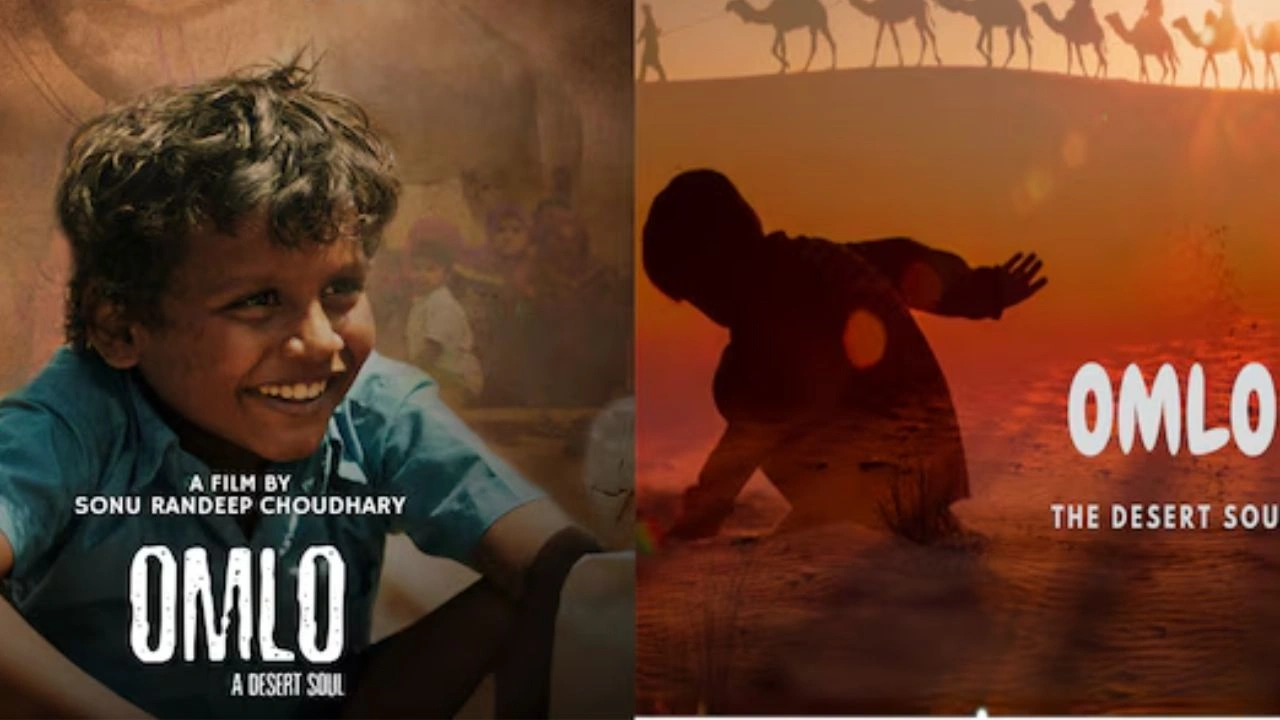
Omlo Movie: Indian cinema is often associated with large-scale productions and mainstream entertainment, but the country’s film landscape also includes powerful independent films that explore complex social issues with honesty and depth. One such film that has begun attracting attention is Omlo (2026), a Rajasthani-language drama directed and written by Sonu Randeep Choudhary.
Unlike commercial films that focus primarily on spectacle, Omlo tells an intimate and emotional story about childhood, family trauma, and the possibility of breaking generational cycles of violence.
The film stars Shambho Mahajan, Sonu Randeep Choudhary, and Sonalli Sharmisstha, bringing together actors capable of delivering deeply emotional performances.
At the center of the story is a seven-year-old boy whose unexpected relationship with a camel becomes a symbol of hope and emotional healing within a troubled family.
The narrative examines how abuse and trauma can pass from one generation to another—and whether compassion and innocence can help break that cycle.
Released on March 21, 2026, the film represents an important contribution to regional Indian cinema, highlighting the unique storytelling traditions of Rajasthan.
In this detailed Omlo Movie Review, we explore the storyline, performances, direction, themes, cinematography, and the broader significance of the film.
Plot Overview: A Child’s Perspective on Family Trauma
The story of Omlo unfolds in a rural Rajasthani setting where traditional lifestyles and family structures shape everyday life.
At the center of the narrative is a seven-year-old boy, whose life is deeply influenced by the dynamics within his family.
His father carries unresolved trauma from his own childhood.
Growing up under an abusive parent, the father has unconsciously internalized the same patterns of behavior.
Now, he finds himself repeating those actions with his own child.
This cycle of generational trauma creates a household environment filled with tension, fear, and emotional distance.
The boy’s mother recognizes the destructive pattern unfolding within the family.
She hopes that her son will not inherit the same cycle of anger and violence that has affected the men in their family for generations.
Amid this emotional turmoil, the young boy develops an unusual bond with a camel.
This relationship becomes the emotional heart of the film.
The camel represents more than just an animal companion.
It symbolizes freedom, understanding, and emotional safety—qualities that the child struggles to find within his own family.
As the story unfolds, the boy’s connection with the camel gradually reveals deeper truths about his family’s past.
Through moments of silence, observation, and innocence, the child becomes a witness to the emotional struggles of the adults around him.
The narrative ultimately explores a powerful question:
Can a child’s innocence and empathy break a cycle of generational trauma?
Read Also: Ek Din 2026 movie: A Heartfelt Hindi Romance Starring Sai Pallavi and Junaid Khan
Direction by Sonu Randeep Choudhary
Director Sonu Randeep Choudhary takes a deeply personal and sensitive approach to storytelling in Omlo.
Instead of presenting the story through dramatic confrontations or exaggerated emotional scenes, the director focuses on subtle moments that reveal the characters’ inner lives.
Choudhary uses a minimalistic narrative style that emphasizes realism.
The film allows the audience to observe the characters’ emotions through gestures, expressions, and everyday interactions.
This approach creates an intimate atmosphere where viewers feel closely connected to the characters.
The director also uses symbolism effectively.
The camel becomes a visual representation of the boy’s emotional refuge.
Through careful storytelling, Choudhary transforms a simple relationship between a child and an animal into a powerful metaphor for resilience and hope.
Performances: Emotional Authenticity on Screen
The success of Omlo relies heavily on the performances of its cast.
Each actor delivers a portrayal that feels natural and emotionally honest.
Shambho Mahajan
Shambho Mahajan plays the young protagonist with remarkable authenticity.
Child actors often face challenges in portraying complex emotions, but Mahajan’s performance feels genuine and deeply affecting.
His expressions capture the confusion, curiosity, and quiet strength of a child navigating a difficult family environment.
Mahajan’s ability to communicate emotions without excessive dialogue is one of the film’s greatest strengths.
Sonu Randeep Choudhary
Director Sonu Randeep Choudhary also appears in the film as the father.
His portrayal of a man struggling with unresolved trauma is both intense and nuanced.
Choudhary avoids portraying the character as purely villainous.
Instead, he presents a man who is trapped within patterns he does not fully understand.
This layered performance adds complexity to the narrative.
Sonalli Sharmisstha
Sonalli Sharmisstha plays the mother, whose role represents compassion and resilience.
Her character becomes the emotional anchor of the story.
Sharmisstha portrays a woman who recognizes the destructive cycle affecting her family but struggles to change it.
Her performance captures both vulnerability and quiet strength.
Cinematography: Capturing Rural Rajasthan
The cinematography of Omlo plays an essential role in shaping the film’s atmosphere.
The film uses the landscapes of rural Rajasthan as both a physical and emotional backdrop.
Wide shots of desert landscapes emphasize the isolation experienced by the characters.
At the same time, close-up shots highlight the subtle emotional expressions of the actors.
Natural lighting enhances the film’s realism.
Scenes featuring the boy and the camel are particularly striking, as they visually represent the emotional connection between them.
The cinematography helps transform the environment into an active part of the storytelling.
Music and Sound Design
Unlike many mainstream films, Omlo uses music sparingly.
The background score focuses on atmospheric sounds that enhance the emotional tone of the story.
Soft instrumental compositions appear during reflective moments.
Environmental sounds—such as wind, footsteps, and animal movements—create a sense of immersion.
This minimalist approach allows the audience to fully experience the emotional weight of each scene.
Themes Explored in Omlo
Omlo explores several powerful themes that resonate deeply with viewers.
Generational Trauma
The central theme of the film is the transmission of trauma across generations.
The father’s behavior reflects unresolved pain from his own childhood.
The story examines how these patterns can continue unless consciously addressed.
Childhood Innocence
The young protagonist represents innocence and empathy.
His perspective allows the audience to see the emotional consequences of adult conflicts.
Breaking the Cycle
The mother’s hope that her son will break the cycle of violence forms the emotional core of the narrative.
The film suggests that change is possible through awareness and compassion.
Human-Animal Connection
The relationship between the boy and the camel symbolizes emotional healing.
Animals often represent unconditional acceptance, which contrasts with the tension within the family.
Strengths of Omlo
Omlo stands out for several reasons.
Unique Storytelling
Few films explore generational trauma through the perspective of a child and his connection with an animal.
Authentic Performances
The cast delivers performances that feel emotionally genuine.
Beautiful Cinematography
The film captures the landscapes of Rajasthan in a visually striking way.
Meaningful Themes
The story encourages reflection on family relationships and emotional healing.
Weaknesses of the Film
Despite its strengths, Omlo may not appeal to all audiences.
Slow Narrative Pace
The film’s reflective storytelling may feel slow for viewers expecting dramatic plot twists.
Limited Commercial Elements
The film prioritizes emotional depth over conventional entertainment.
However, these elements contribute to the film’s artistic integrity.
Read Also: Charak Movie 2026 – A Chilling Thriller About Faith, Ritual, and Human Endurance
Who Should Watch Omlo?
Omlo is ideal for viewers who appreciate:
- Independent cinema
- Character-driven dramas
- Stories exploring social and psychological themes
- Films highlighting rural Indian life
Audiences interested in meaningful storytelling will likely find the film deeply moving.
Official Trailer – Omlo Movie
Conclusion
Omlo (2026) is a powerful and emotionally resonant film that explores the complexities of family trauma, childhood innocence, and the possibility of breaking destructive cycles.
Director Sonu Randeep Choudhary delivers a thoughtful narrative that combines intimate performances with beautiful visual storytelling.
Through the perspective of a young boy and his bond with a camel, the film offers a unique reflection on resilience and hope.
While Omlo may not follow the formula of mainstream cinema, its sincerity and emotional depth make it a memorable cinematic experience.
For viewers seeking films that explore the human condition with honesty and compassion, Omlo is a powerful and thought-provoking drama.
Rating: 4.2 / 5
Omlo reminds us that sometimes the smallest voices—especially those of children—hold the power to break cycles that generations before them could not.